
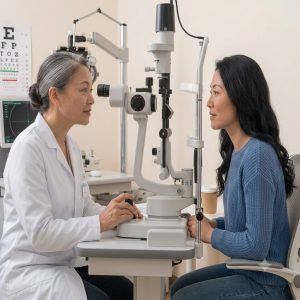
Laser Eye Surgery Side Effects: What to Ask During Your Consultation
Reviewed by Dr Diymitra K Ganasan, Refractive Surgeon of OasisEye Specialists | Last updated: July 2026 Laser eye surgery has helped millions of people see clearly without glasses or contact lenses — but like any procedure, it comes with possible side

Understanding Contact Lenses and Dry Eye
If you wear contact lenses, or are thinking about trying contact lenses, you might have heard about dry eye as a potential concern. But what’s the connection between contact lenses and dry eye? Let’s break it down in simple terms
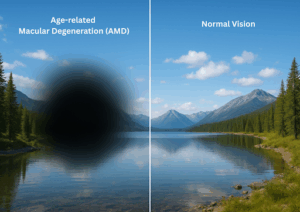
Age-related Macular Degeneration (AMD)
Age-related macular degeneration (AMD) is a chronic and painless disease of the macula that can blur your central vision. The macula is part of the retina, which is the light-sensitive tissue at the back of the eye that mainly controls

What is Macular Hole?
A macular hole is a small break or tear in the macula, the part of the retina responsible for sharp, central vision. How a Macular Hole Forms The most common cause of macular holes is the aging process. As
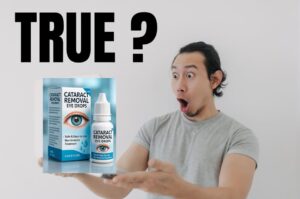
Can Cataracts Be Cured Without Surgery?
Cataracts are a common eye condition where the natural lens becomes cloudy, leading to blurry vision. While mostly age-related, cataracts can affect anyone and often develop gradually over time. Source: Autumn Sprabary What Causes Cataracts? Cataracts form when proteins in

What Age is Best for Laser Eye Surgery and How It Affects The Types of Treatment Decision by Doctor?
General Age Guidelines Minimum age: 21 years old Stability of prescription: Doctors want a stable refraction (no major changes in glasses power). No other corneal anomalies, like past history of cornea scar or injury or signs of corneal diseases Upper
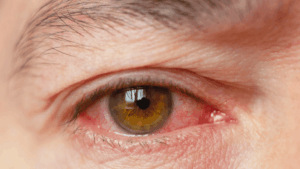
Understanding Uveitis
Uveitis is the inflammation of the uvea (the middle layer of the eye), which includes the iris, ciliary body, and choroid. It can cause eye pain, redness, blurred vision, light sensitivity and floaters. Types of Uveitis Source: Tennessee Retina

Corneal Collagen Cross-Linking: What Is It?
Corneal cross-linking (CXL) for the eye is a surgical treatment to treat conditions that affect the cornea, the transparent surface of the eye. This procedure strengthens the collagen fibers within the cornea to prevent further damage, stabilize the shape of

Floaters and Flashes: Recognizing Retinal Detachment as an Eye Emergency
Have you recently noticed sudden flashes of light or floaters in your vision? Are parts of your field of view obscured by a curtain-like shadow? These could be warning signs of retinal detachment, which is a medical emergency condition.