Smoking your way to blindness
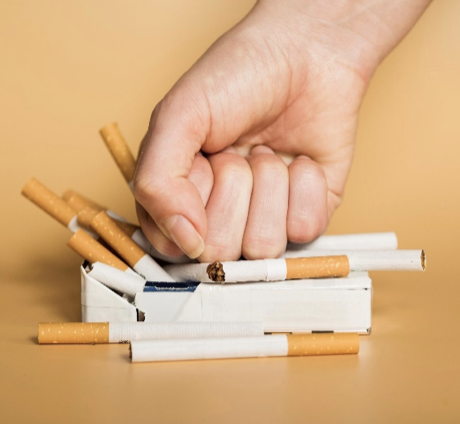
Tobacco smoking is the consumption of tobacco which can be found in lighting cigarettes, cigars and pipes. The practice of inhaling and exhaling such fumes poses an epidemic on its own, known most commonly to cause significant damage to the heart and lung. Ever thought how smoking could develop or exacerbate eye problems that are sight-threatening and potentially lead to blindness? Some of the eye diseases are such as:
Dry Eye Syndrome
Tobacco smoke irritates the conjunctival mucosa of the eye, decreases the quantity and quality of tears, thereby causing eye dryness. The insufficiency of quality tears causes smokers to experience itchiness, eye redness, foreign body sensation, swelling, and watery eyes.
Cataract
It is the clouding of the crystalline lens of the eye. Studies have found smokers significantly increase their risk of cataract development up to 3 folds as the practice of smoking causes alteration in the cells and increases build-up of heavy metal residue in the crystalline lens.
Age Related Macular Degeneration (AMD)
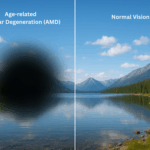
AMD is an acquired degenerative condition that impairs the central vision. Smoking causes constriction of the blood vessels and reduction in the level of lutein and zeaxanthin in the macula, which accelerates the rate of developing AMD by up to 4 times. It causes one to have difficulty in reading, seeing fine details, poor facial recognition, seeing wavy lines, and many more.
Uveitis
It is the inflammation of the central layer of the eye, known as the uvea. According to studies, smokers have an increased risk of 2.2 times to develop uveitis compared to non-smokers.
Glaucoma
Glaucoma is an eye disorder which is indicated by compromised blood flow to the optic nerve, resulting in progressive loss of nerve tissue and gradual vision loss. Smoking contributes to this condition by increasing plaque formation in the blood vessels, which in turn reduces blood flow.
Diabetes Retinopathy
It is established that smokers with Type 1 diabetes mellitus (DM) have a higher risk of developing diabetic retinopathy. The act of smoking combined with the chronic hyperglycemic state damages the tiny blood vessels in the retina by reducing retinal blood flow, causing these vessels to break, leak or even block.
Not only do smokers significantly increase their risk for all these diseases, it affects the eyes of people around them via passive exposure (secondhand smoke) as well. The negative impact of smoking during pregnancy can be transmitted to newborns, contributing to higher risk of visual disorders.
Residents within Klang Valley in areas such as Cheras, Puchong, Shah Alam, Petaling Jaya, and Kepong can visit our low vision specialist, Ms Vinodhini Naidu to have their eyes examined at
Nexus Bangsar South KL branch. Residents in Seremban 2, Senawang, Sendayan and Port Dickson can visit Dr Teh Wee Min at our
Seremban branch. Residents in Johor Bahru, Skudai, Kulai, Iskandar Puteri, Senai, Tebrau, Batu Pahat, Kluang, Segamat can visit
Dr Ling Kiet Phang or
Dr Chan Choon Teng at our
Johor Bahru branch. Residents in Perai, Bukit Mertajam, Butterworth, Penang island, Alor Setar, Kulim and Sungai Petani can visit
Dato’ Dr Haslina at our
Penang branch.















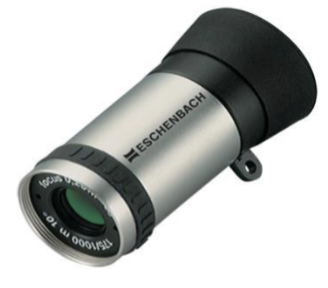 An optical system that uses two convex lenses. Image produced by Keplerian was real and inverted which required a prism to reverse the image. Therefore it is heavier, longer and costs more compared with Galilean. Keplerian provides a greater visual field and better optical quality than Galilean.
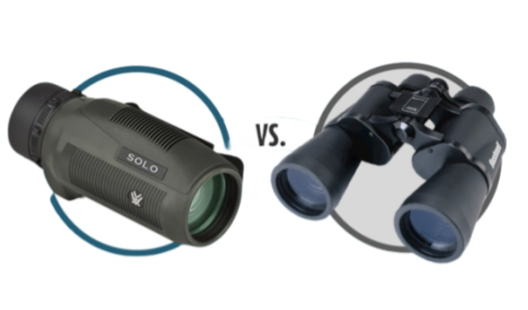 Monocular telescope is indicated when there is a significant difference in visual acuity between the 2 eyes. It is advisable to use in the better-seeing eye. It is more compact, lightweight, and cheaper. Drawback associated with the monocular telescope was eye fatigue and lesser field of view compared to the binocular telescope. Binocular telescope is indicated when there is similar visual acuity in both eyes, with the purpose of increasing the visual field, and for nystagmus. Binocular telescopes will be heavier and expensive.
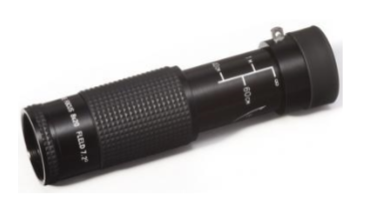 It is light, compact and cheaper than the Galilean and Keplerian. It is suitable for short activities and could be a first prescription choice.
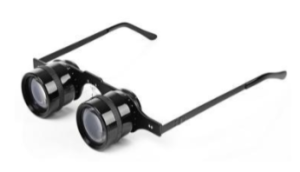 It is suitable for those who have hand-eye coordination problems and is very useful for prolonged activities or activities that require visualisation of details.
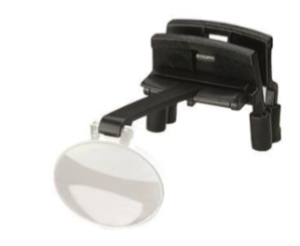 The clip-on model has both advantages. It is lighter than the spectacle-mounted model. However, the lenses can be scratched and the visual field can be reduced to further distances.