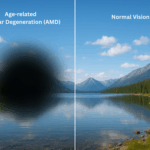
A macular hole is a small break or tear in the macula, the part of the retina responsible for sharp, central vision.
How a Macular Hole Forms
The most common cause of macular holes is the aging process. As we age, the vitreous, a gel-like substance in the eye, shrinks and separates. If some of the vitreous remains attached to the retina as it shrinks, it can pull a section of the retina away with it, leading to a hole. This process is known as vitreomacular traction.
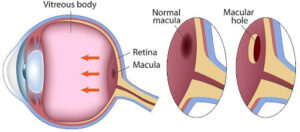
Source: Retina Center Chicago
Other causes or risk factors of macular holes include:
- High myopia (short-sightedness)
- Eye injury
- History of retinal detachment
- Diabetes
Symptoms
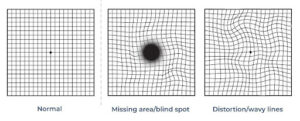
- Distorted central vision
- Blurred central vision
- Dark or blind spot at central vision
- Difficulty with tasks requiring fine detail, such as recognizing faces or reading small print
Source: Pure Optical
Diagnosis
An ophthalmologist can diagnose a macular hole through several tests, including:
- Dilated eye examination
- Optical coherence tomography (OCT): This non-invasive imaging test provides detailed cross-sections of the retina and can help identify the size and location of the hole.
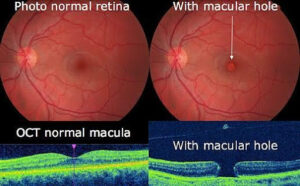
Source: NERA
Treatment
In many cases, surgical intervention is required to repair a macular hole, especially if it affects vision significantly. Vitrectomy is the procedure in which the surgeon removes the vitreous gel and replaces it with a gas bubble. The patient is asked to maintain a specific head position for a period to ensure the gas bubble presses against the hole, aiding in its closure.
Conclusion
It’s important for anyone experiencing symptoms like blurred vision, distorted vision, or central blind spots to seek an eye examination.
The vitreoretinal surgeons available in OasisEye Specialists include: