Understanding the cost of Laser Vision Correction

laser vision correction

SMILE pro, Femto LASIK, TransPRK and glasses – comparing the total costs

Consider the yearly and long-term costs of your glasses and contacts when thinking about investing in laser vision correction. In today’s blog post, we’re going to be discussing cost, value and investment as it relates to your vision correction and care options. This is a very important topic as you consider your options and plan for caring for your vision.
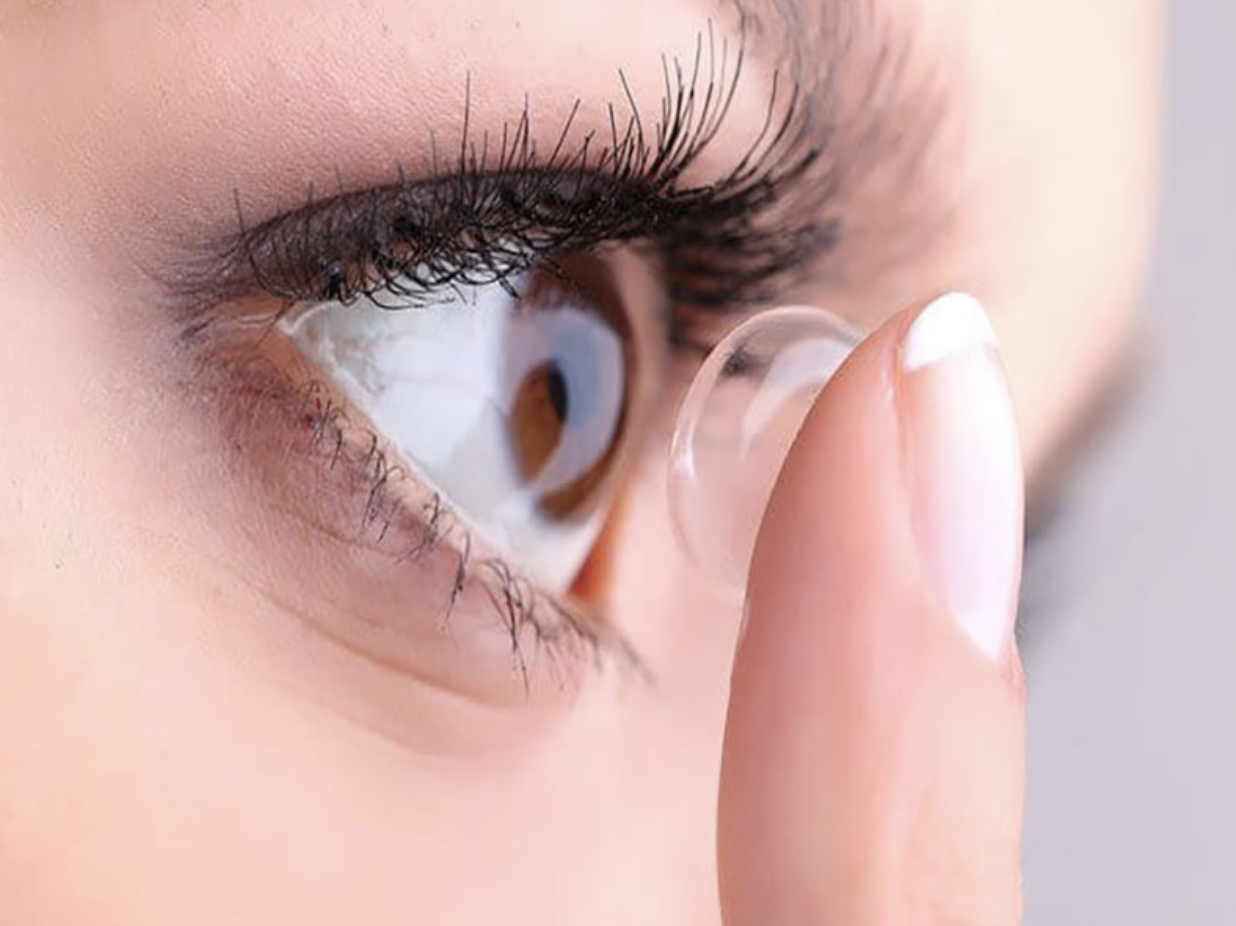
Person placing a contact lens in their eye.

First, let’s acknowledge an important fact. Laser vision correction options such as Femto LASIK and SMILE pro are not inexpensive, especially if you’re investing in quality technology, experienced surgeons and a proven laser program. Your eyes are precious, and laser vision correction is not the best place to shop based only on cost!

So how does the cost of laser vision correction compare to glasses and contacts?

Let’s start with contact lenses. If you wear disposable contacts and replace them every two weeks (which is the most common replacement schedule recommended by eye doctors), you’ll pay about RM 500 to RM 1000 a year for lenses and another RM 100 to RM 250 a year on contact lens solution. This adds up to about RM600 to RM1250 a year to wear your contact lenses.

Now, let’s consider the cost of eyeglasses, which is a bit more tricky to average due to the wide variety of frames, lenses and brands to choose from. According to Vision Service Plan, the national cost average for a pair of prescription glasses is RM400, with costs ranging from RM300 to well over RM1000+ for designer frames and premium lens technologies.

Various eyeglasses frames on display.

Now consider these costs over a more than 10-year period. For regular contact lens wearers, this equates to more than RM700 in lens and solution purchases. For glasses wearers, depending on the number of glasses and sunglasses pairs you purchase, it also equates to thousands of dollars.

Finally, be sure to understand the pricing options available at your preferred Femto LASIK or SMILE pro practice. Some practices advertise a very low price for laser vision correction, only to give you a much higher price because of your prescription after you come in for a consultation. Other practices offer a flat fee for your laser vision correction, which will include any and all technologies that will be needed to give you better vision. Be sure you discuss costs in detail with your eye practice and know your exact costs.

In truth, no matter what you choose for your vision correction – TransPRK Femto LASIK, SMILE pro, glasses or contacts – caring for your vision can be expensive! All these treatments are an investment in your vision and your quality of life over many years. Instead of considering only the immediate cost of each option, be sure to invest in a long-term plan that matches your lifestyle.

What do you think? Does considering the cost of glasses, contacts and laser vision correction over 10 or more years change the way you think about the cost? If you have questions about the cost or value of SMILE pro, TransPRK and Femto LASIK, please call or email us and we’ll be happy to discuss your options.


Are you a FemtoLASIK and SMILE pro candidate?

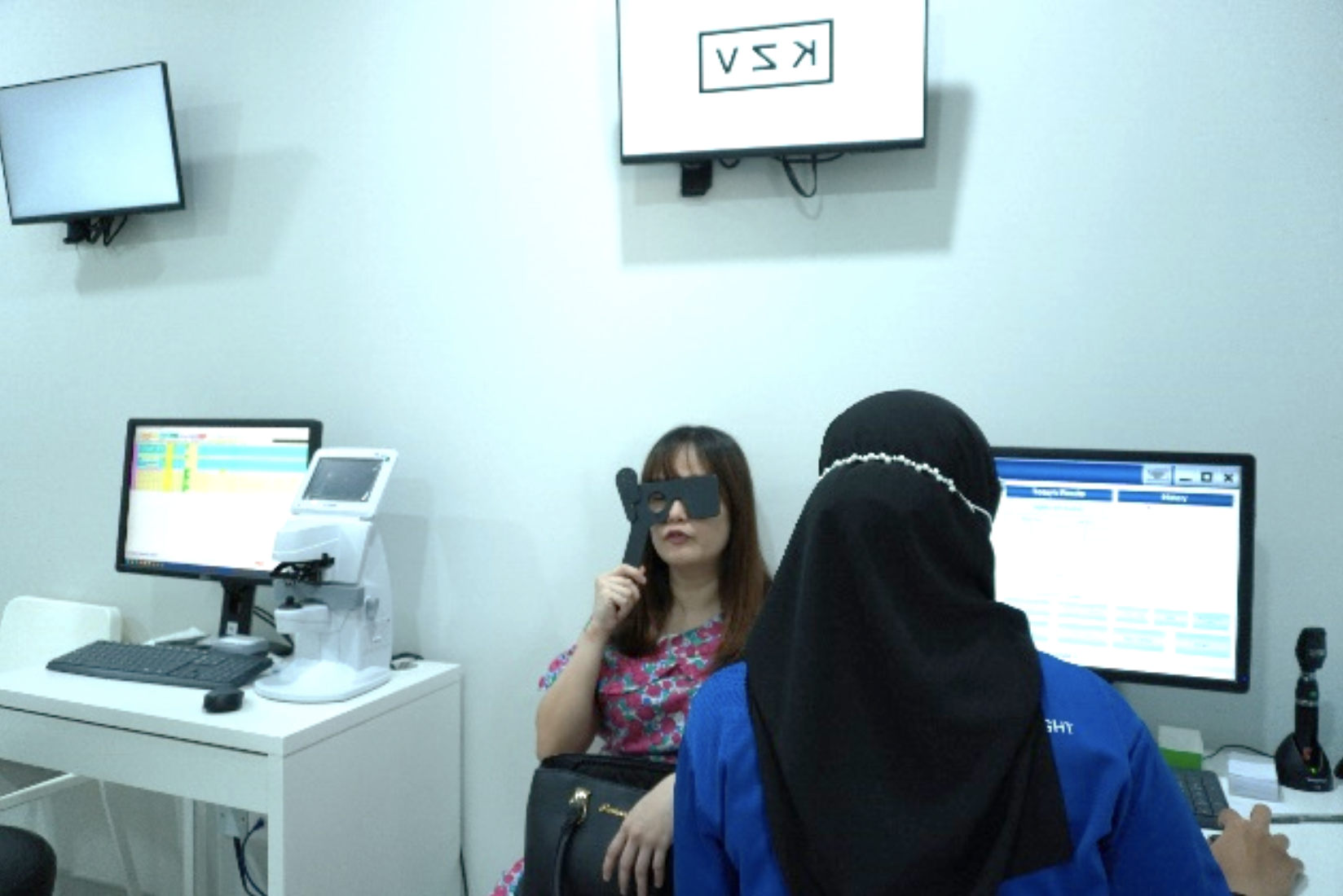
Patient undergoing an eye exam for laser vision correction.As the latest technology in laser vision correction, SMILE pro & Femto LASIK are a comfortable procedure, but how do you know if it’s right for you?

  • Do you have blurry vision or are you nearsighted?
  • Do glasses or contact lenses inconvenience your daily life?
  • Do you often experience dry eye symptoms?
  • Are your eyes intolerant of contact lenses?
  • Do you play contact sports or work on a flight crew, as rescue personnel, or in the military?

If you answered yes to any of the questions above, SMILE pro & Femto LASIK might be the best laser vision correction option for you. 

As part of any laser vision correction program, each patient has to go through a detailed eye examination with an eye doctor to fully determine their suitability for SMILE pro and Femto LASIK and TransPRK. Factors your eye doctor will take into consideration include the nature and degree of the refractive error and the curvature and thickness of the cornea.

Optometry equipment for SMILE pro and Femto LASIK.

SMILE pro and Femto LASIK have quick vision recovery and short post-op downtime where they typically regain clarity 1-2 days later. In addition, due to short surgery time, this enhances the safety measures and reduces the chances of complication which is an attractive option for patients seeking for laser vision correction. Overall, it is a very comfortable and convenient experience. Patients are able to resume most normal daily activities within a day, including driving, showering, applying makeup and going to work. However, the condition may varies based on individual recovery time.

Call us today to discuss the best laser vision correction option for you!

Femto LASIK AND SMILE pro– What’s the difference?

lasik work

Femto LASIK and SMILE pro: The future is brighter with an advanced laser vision correction technology option. Whether Femto LASIK or SMILE pro is the laser vision correction best suited for you, your vision for the future can be sharpened.

As you know, Femto LASIK has been helping patients for more than 25 years to see more clearly without glasses. Today we want to tell you about the advanced laser vision correction technology coming to our practice – SMILE pro! Together with Femto LASIK, SMILE pro provides us with a complete set of laser vision correction tools to help many patients find better vision and less dependence on glasses or contacts.

Understanding how both Femto LASIK and SMILE pro work will help you understand your vision procedure options.

LASIK was developed in the early 1990s and is the most utilized form of laser vision correction today.

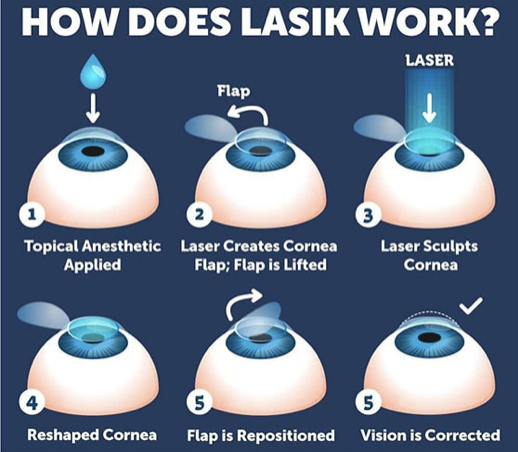
During the Femto LASIK procedure, a laser is used to make a small flap across the cornea. The flap is folded back, and a second laser is used to reshape the cornea, which allows the eye to focus clearly. The flap is then folded back into its original position.

Steps of the Femto LASIK procedure for vision correction.

After Femto LASIK, it takes very little time for the flap to heal, and side effects include slight risk of infection and dry eye symptoms. Visual recovery takes place immediately. Healing and stability of the flap takes four to seven days.

SMILE pro is the first major innovation in laser vision correction since LASIK. The procedure is minimally invasive, noiseless and odorless.

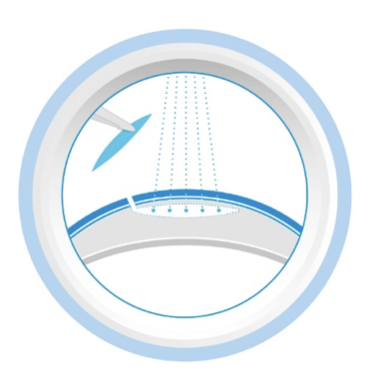
During a SMILE pro procedure, a thin, contact lens-shaped layer just beneath the surface of the eye is removed through a small opening. Due to removing this layer, the cornea is gently reshaped and the patient’s vision is sharpened, correcting the refractive error.
SMILE pro procedure illustrating cornea reshaping.

SMILE pro is a gentle and highly precise procedure lasting only a few minutes total, with the laser only active for about 10 seconds. There is little disturbance to the eye because of the small laser opening size.

Cases of dry eye, severed nerves and infection as a result of laser vision correction are very low with SMILE pro. Overall it tends to be a very comfortable and convenient experience for patients. Patients are able to resume most normal daily activities within a few days, including driving, showering, applying makeup and going to work.

The visual outcome is highly predictable. More than 2,000,000 SMILE pro procedures have been performed worldwide, and results have been consistent.

Preparation Before TransPRK Treatment

Transepithelial PhotoRefractive Keratectomy (TransPRK) is the latest technique of laser refractive surgery. TransPRK may be known to some as No Touch LASIK, No Touch Laser Epi-LASIK, SmartSurface PRK or Transepithelial Surface Ablation (TESA). Like any medical procedure, you will have to undergo a series of tests and scans to determine if you are suitable for TransPRK laser refractive surgery.

Here are a few things you may expect during your initial consultation at OasisEye Specialists.

1. You will need to stop wearing contact lenses for a short period prior to the eye examination

It is important to remove contact lenses for a certain period before your initial consultation. Contact lenses will mould our cornea and change the corneal curvature, which might lead to a change in your eye power and cornea measurements. In order to calculate your actual refractive error (eye power) for the TransPRK treatment, you will have to stop wearing contact lenses for a specific period. This step is crucial for the cornea to return to its natural shape and curvature to avoid inaccurate measurements. Before the eye examination or the procedure, it is recommended to stop wearing soft contact lenses for at least 5 days, and at least 10 days for rigid gas permeable (RGP) or Orthokeratology (Ortho-K) lenses.

2. TransPRK suitability eye examination

The first eye examination will take about 2 hours to complete, as you will go through a comprehensive eye examination and counselling with an optometrist and eye surgeon. The eye examination results will help surgeons determine if you are a suitable candidate for refractive surgery. The pre-operative assessment consists of diagnostic analysis of your cornea, measurement of your refractive error (eye power), dry eyes evaluation and ocular health evaluation. First, an optometrist will take your corneal measurements with a corneal topographer. Then the optometrist will check your vision and perform eye power measurements (refraction). The optometrist will test your eyes with different lenses and determine the power needed to correct your vision. The optometrist will discuss your refractive surgery options available based on the measurements taken. Lastly, a surgeon will examine your cornea, retina and optic nerve to ensure your eyes are healthy. The surgeon will discuss the surgery procedure, risks and benefits of the surgery with you if you are suitable for TransPRK. Do not hesitate to ask any questions before deciding to go through the surgery. You will given the opportunity to raise any concerns during the discussion.

3. Dilation of pupils may be performed

Dilation of pupils may be performed during the initial consultation. The dilation drops relax your focusing eye muscles for the optometrist to measure your final eye prescription and aid the surgeon to evaluate your retina. After the dilation, your eyes may be sensitive to light and your vision will be blurry, particularly at near distance for a few hours. Thus, do bring a pair of sunglasses for your comfort. It is also advisable not to drive on that day.

4. Bring a pair of sunglasses on your procedure day

After your surgery, your eyes may be tearing and sensitive to light. Wearing a pair of sunglasses will help with the glare and protect your eyes from dust and foreign particles. You are encouraged to cultivate a habit of wearing sunglasses when outdoors for the next few months after your treatment. Get a pair of good sunglasses with UV400 protection to protect your eyes from harmful UV rays. Polarized sunglasses help reduce glare and reflection off surfaces. Larger and wraparound sunglasses help protect our eyes from foreign particles.

Benefits of TransPRK

Transepithelial Photorefractive Keratectomy (TransPRK) is a touch-free laser eye correction for refractive errors such as short-sightedness (myopia), long-sightedness (hyperopia) and astigmatism.

To date, the touch-free, single-step TransPRK can only be performed with the SCHWIND Amaris laser. With other lasers, two laser steps are required to perform TransPRK: one to remove the corneal epithelium and then to perform the refractive correction. Unlike the other refractive surgeries, TransPRK is the new one-step incision-free procedure. The SCHWIND Amaris laser removes the epithelium and treats the refractive error without suction, flap or blade. This touch-free procedure is non-invasive, safe and gentle to the eye. The result of this technique is higher-quality vision and faster healing.

A laser is applied to the surface of the corneal epithelium. Laser is continuously applied to correct the refractive error. The resultant cornea is flatter, thinner, and refractive error is treated.

TransPRK is the newer version of Epi-LASIK. In the Epi-LASIK procedure, a fine blade is used to remove the corneal epithelial cells. Due to the advancements in technology, TransPRK surgery can now offer patients a one-step, no-touch procedure with the use of the SCHWIND Amaris laser. Using the TransPRK, the surface epithelial cells will first be removed with the excimer laser, and then proceed immediately with the same laser to reshape the cornea for the refractive correction. TransPRK is safer, more accurate and gives consistent, predictable results.

After surgery, eye drops will be prescribed to aid in the healing and to prevent infection. A special contact lens is worn to promote healing and protect the cornea as well as to minimize the discomfort. The epithelium usually heals in 3 to 5 days and once the epithelium is healed, the contact lens is removed to prevent mucus and bacteria from sticking onto the contact lens. TransPRK is able to provide long-term vision correction for a wide range of refractive errors. Patients no longer have to rely on their glasses or contact lenses for clear vision. This procedure is suitable for those who are above the age of 18 and with a stable eye refraction (‘power’).

Benefits of TransPRK

1. Corrects vision without the need to cut a flap on the cornea and without a blade

Treatment for TransPRK is done directly on the upper surface of the cornea. Hence, there are no cut or flap-related complications as compared to LASIK. TransPRK has been introduced as a form of laser surface ablation and it is non-invasive. It is a no-blade surface-based procedure so it is a safer procedure that is suitable for almost everyone.

2. TransPRK can be the second chance for patients with thin corneas or patients who have had complications from other refractive surgeries.

If you have a thin cornea, you may already have been rejected for the LASIK procedure. TransPRK can be your second chance to regain clarity to your unaided vision. Scars from LASIK and Epi-LASIK complications can be treated with TransPRK. TransPRK is ideal and recommended for many cases of enhancement even in previous LASIK and Epi-LASIK.

3. Fast

TransPRK is done in just one step procedure. The epithelium is removed and the refractive correction is performed in a single laser step. The shorter the treatment time, the lower the risk of corneal dehydration is minimized, resulting in a lower risk of post-operative dry eyes. Due to the small wound area, the healing process is faster than the older methods.

4. Versatile

Due to its tissue-saving laser profile, TransPRK is suitable for almost all laser refractive candidates wishing to see clearly. It is ideal for active and athletic people and for professions where sharp vision is needed.