Medically reviewed by Dr Amir Samsudin, BSc (St Andrews), MBChB (Manchester), MSOphthal (UM), PhD (UCL), AM (Mal), Consultant Ophthalmologist, OasisEye Specialists
Last reviewed: October 2026
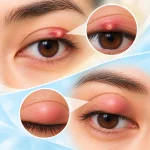
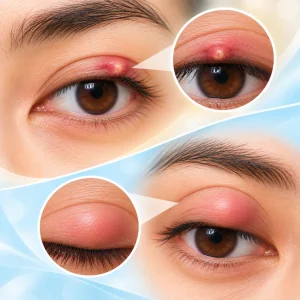
A stye (hordeolum) is a sudden, localised infection of an eyelid gland, usually causing a painful lump. A chalazion is a lump caused by a blocked oil gland and the resulting inflammation, rather than an active bacterial infection. It is often painless once the initial inflammation settles. [1–3]
Both conditions can affect adults and children. They can look alike at first, so the location and appearance of a lump alone are not always enough to distinguish them.
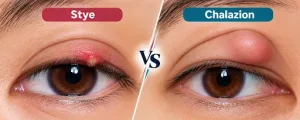
Illustration: typical external stye (left) and chalazion (right). Actual appearances vary.
Causes and risk factors
A stye often develops when bacteria, commonly Staphylococcus species, infect an eyelash-associated gland (external stye) or an oil gland within the eyelid (internal stye). A chalazion develops when oil from a meibomian gland cannot drain normally, leading to local inflammation. [1,2]
| Stye | Chalazion |
|---|---|
| Bacterial infection of an eyelash-associated gland or a deeper eyelid oil gland. | Blocked meibomian gland with inflammation from retained oil. |
| Eyelid inflammation (blepharitis) and poor hand or eyelid hygiene may contribute. | Meibomian gland dysfunction, blepharitis and rosacea can increase susceptibility. |
| Some people get styes repeatedly, often alongside long-term eyelid inflammation. | Previous chalazia or an internal stye may increase the likelihood of a chalazion. |
Sources: [1,3,6,10].
Signs and symptoms
A stye may cause local redness, tenderness, swelling and sometimes a visible pus-filled point. An internal stye may be deeper and less obvious. A chalazion often becomes a firm lump with little pain, although it can be tender initially. Either condition can cause irritation or watering. [1–3]
An eye care professional can examine the eyelid, including its inner surface, to assess gland openings and exclude other causes. [1] A large chalazion may change the shape of the cornea (the clear front surface of the eye), producing astigmatism and blurred vision. This is particularly important in young children. [4]
Summary of differences and treatment
| Feature | Stye (Hordeolum) | Chalazion |
|---|---|---|
| Cause | Local bacterial infection | Blocked oil gland with inflammation |
| Pain | Usually tender or painful | Often painless after early inflammation |
| Location | Lash margin or inside eyelid | Usually deeper in eyelid |
| Appearance | Red swelling; sometimes pus | Firm lump; may initially be red |
| Usual course | Often improves over days to 1–2 weeks | May resolve over weeks; can persist for months |
| Initial care | Warm compresses; gentle eyelid hygiene | Warm compresses; gentle lid massage |
| Medical treatment | Selected antibiotics or drainage if indicated | Steroid injection or incision and curettage for selected persistent lesions |
The usual first step for an uncomplicated lump is home care. However, severe infection, visual symptoms or an atypical lesion require assessment rather than prolonged self-treatment. [1–3,5]
How to care for an eyelid lump at home
Wash your hands. For an uncomplicated external stye or chalazion, place a clean, comfortably warm (not hot) cloth over the closed eyelid for 5–10 minutes, two or three times daily. Rewarm the cloth as needed. [1] For a chalazion, gentle massage afterwards may help drainage; avoid forceful pressure. [3,10] Supervise children and test the temperature first. Avoid eye makeup and contact lenses until the lump settles. Do not squeeze or puncture it. [3,6] If the lump is on the inner surface of the eyelid, or you are unsure which type of lump you have, arrange an eye examination. [1]
Guidance on warm-compress duration and frequency varies, and evidence for non-surgical treatments remains limited. [3,5–7]
When medical treatment is needed
Antibiotics are not routinely necessary for an uncomplicated chalazion or external stye. A retrospective study found that adding antibiotics to conservative care was not associated with greater treatment success. A clinician may prescribe antibiotics when an internal stye or a spreading bacterial infection warrants them. [1,8] Do not use leftover antibiotic or steroid eye drops without professional advice.
A persistent or troublesome chalazion may be treated by an ophthalmologist with a steroid injection or incision and curettage (a small procedure to remove the inflammatory material). An abscess that does not drain may also require a procedure. The choice depends on the lump’s location and size, the patient’s age and the clinical findings. [1,2,5]
When should you seek urgent medical care?
Seek same-day medical assessment if redness or swelling is spreading beyond the lump, the eyelid becomes severely swollen, or fever develops. Go to an emergency department immediately if there is pain when moving the eye, restricted eye movement, a bulging eye, double vision or reduced vision. Spreading eyelid redness may indicate preseptal cellulitis; the emergency signs may indicate orbital cellulitis, an infection deeper in the eye socket. [9]
Arrange an eye examination if a stye is not improving after several days, persists beyond one to two weeks, or if a chalazion persists for several weeks, enlarges, affects vision or repeatedly returns. Children with large lumps or visual symptoms should be assessed earlier. [1,3–5]
Prevention and eyelid hygiene
No hygiene routine can guarantee prevention. The following measures may help reduce irritation and avoid contamination:
- Wash hands before touching the eyes or handling contact lenses.
- Do not share eye cosmetics or towels.[6,10] Remove eye makeup before sleeping.
- Follow contact lens cleaning and replacement instructions.
- If you have recurrent eyelid inflammation, ask your eye care professional about a suitable lid-cleaning routine and treatment for blepharitis, meibomian gland dysfunction or rosacea.
Diabetes and weakened immunity can increase susceptibility to styes. If you have either condition, seek medical advice promptly if a stye worsens. [6]